
Date: April 2, 2026 | Reading time: 3 minutes | Author: Chiara Moretti
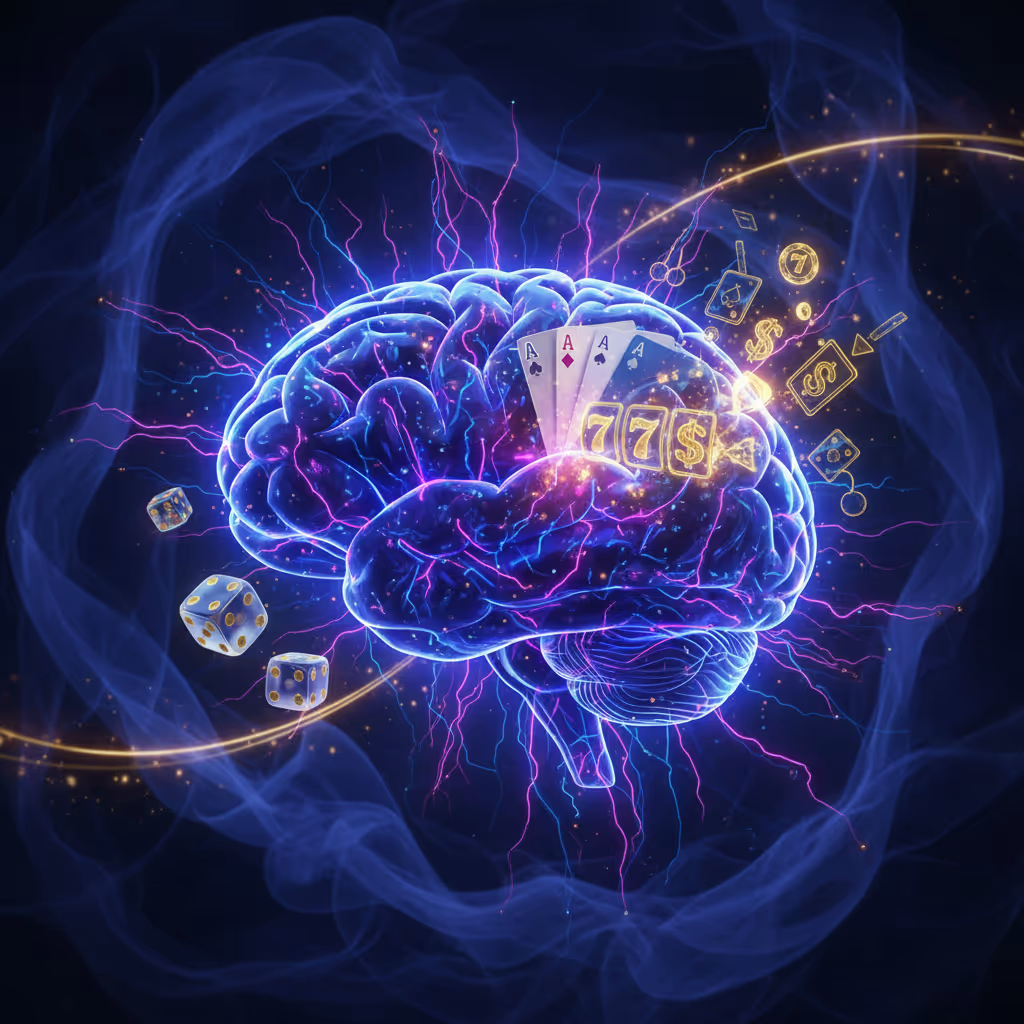
Every time you press "Spin", your brain launches a complex neurochemical cascade that has been refined over millennia. Understanding these mechanisms is the single most powerful tool you can have at any casino - online or offline. On WinWinter Casino, we believe informed players are happier players. That is why we have assembled this deep dive into the neuroscience of gambling, drawing on over 15 years of industry experience and the latest academic research.
The Dopamine Loop: Why Anticipation Beats the Win
Neuroscience studies reveal a counterintuitive truth: your brain's dopamine spike peaks before the result, not after. The moment the reels begin to spin, your ventral striatum lights up with expectation. A win delivers satisfaction, but it is the anticipation that keeps you playing. Understanding this loop is the first step to controlling it.
Near Misses: The Illusion of Almost Winning
When two matching symbols land and the third stops one position away, your brain processes this as a "near win" rather than a loss. The study that measured this is Clark and colleagues at the University of Cambridge (Neuron, 2009): under a scanner, a near miss recruits the same reward circuitry as a real win and increases the urge to keep playing. Recognising this illusion allows you to pause and make rational decisions instead of emotional ones. The wait amplifies the effect: at a table with a real dealer the ball genuinely slows down, and those extra two seconds count for more than any animation, as we describe in our guide to live casino.
The Gambler's Fallacy: Past Does Not Predict Future
After ten reds on the roulette wheel, many players are convinced black is "due". This is the gambler's fallacy - the mistaken belief that independent random events are somehow connected. In online slots, every single spin has exactly the same probability as the last. The past simply does not count. This is just one of several mechanisms casinos rarely explain openly, and recognising them is already half the work.
5 Practical Tools for Smarter Play
- Set a loss limit before you start - decide the maximum you are willing to spend and stop when you reach it.
- Use session timers - WinWinter offers built-in timers that alert you after a set period.
- Take the 10-second pause - before increasing a bet, count to ten. If the urge persists, it is likely emotional, not strategic.
- Track your sessions - review your play history weekly to identify patterns and triggers.
- Know when to walk away - the best win is leaving the table feeling good about your decisions.
- Use responsible gambling tools - deposit limits, self-exclusion and session reminders turn these principles into concrete safeguards, as our responsible gambling guide explains.
Imagine this: you understand exactly why your pulse quickens, why "one more spin" feels irresistible, and why a near miss excites you more than it should. With this knowledge, every session at WinWinter becomes a conscious choice rather than an automatic reaction. The same awareness matters when picking where to play: our comparison of the best slot providers looks at how each one builds that engagement. That is true freedom at the casino.
"Gambling is neither good nor bad in itself - it is a powerful tool that becomes extraordinary entertainment or a trap, depending entirely on how you approach it." - editorial principle of this review site
Question: Why is it so hard to stop gambling even when losing?
Answer: Dopamine is released during anticipation, not just during wins. This creates a reinforcement loop amplified by near misses and cognitive biases.
Question: What is the gambler's fallacy?
Answer: The mistaken belief that past events influence future outcomes in games of pure chance. Each spin is statistically independent.
These cognitive biases also influence how you evaluate promotions: our welcome bonus guide shows how real wagering completely changes the perceived value of an offer.
For an authoritative scientific perspective on gambling psychology, consult ncpgambling.org.