
· Reading time: ~8 min
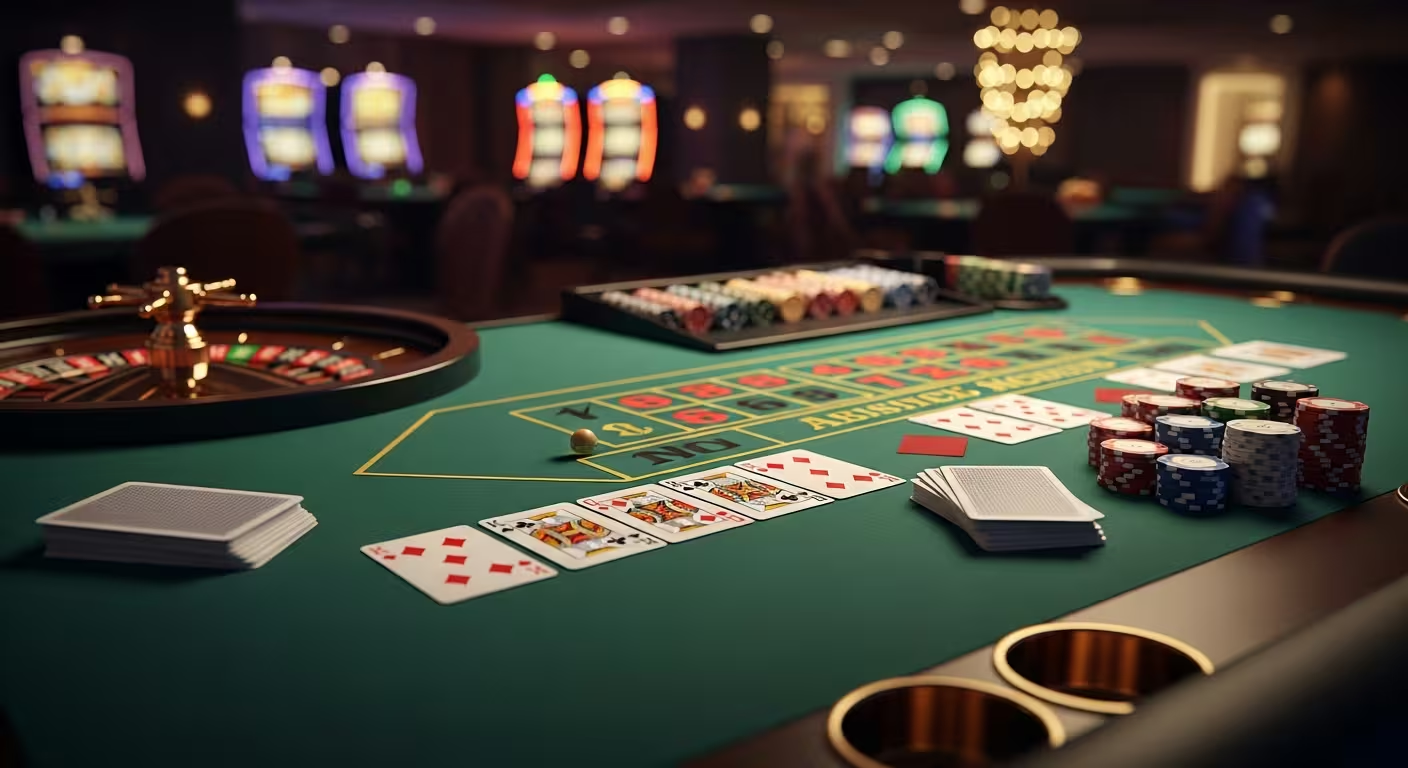
There is a precise moment when a live casino stops feeling like a video and becomes an experience: when the dealer reads your name in the chat and greets you before spinning the ball. Nothing extraordinary happens, and yet it changes how the whole thing feels. On the other side of the screen there is no animation, there is a person working right now, with their hands framed by three cameras. On WinWinter Casino the live tables are the fastest growing section and the one we get the most questions about. This guide explains how a live table actually works in 2026 and which details are worth checking before you sit down.
What a Live Table Really Is
A live table is a real casino game, run by a dealer in the flesh, streamed live and made interactive by a layer of software that records the bets. The difference from a digital roulette is substantial rather than cosmetic: in the digital version the outcome is calculated by a certified random number generator, while at a live table the outcome comes from an event that genuinely happens — a ball slowing down, a deck being cut, a card turning over. The software decides nothing; it simply reads reality and translates it into data.
That reading is done by high resolution cameras and optical recognition systems that identify the value of every card in a fraction of a second. On how randomness is certified in digital games, see our guide to slots with the highest RTP.
What is the difference between a live table and a digital table game?
In a digital table game the outcome is calculated by a certified random number generator. At a live table the outcome comes from a real physical event: a ball that spins, cards shuffled and dealt in front of a camera. The software only reads that event and records the bets of the players connected.
What Happens Behind the Scenes
A live studio looks far more like a television gallery than a gaming floor: technicians monitoring the video feed, supervisors watching every table from a central panel, dealers rotating on short shifts because the concentration required is high. Every hand is recorded: in case of a dispute there is a viewable recording of what happened. The technical figure that affects the experience most, though, is latency — the delay between the real event and what you see. Here is what that means in practice:
| Latency | What you notice | Effect on betting |
|---|---|---|
| Under 1 second | Natural conversation with the dealer | No limitation |
| 1 to 3 seconds | A slight lag, entirely tolerable | Better to bet without waiting for the last moment |
| Over 3 seconds | The dealer announces before you see | Real risk of missing the betting window |
What do you need to play at a live table without interruptions?
A stable connection matters more than a fast one. Around five megabits per second is enough for a high definition stream, but the real enemy is instability: a network that drops packets freezes the video exactly as the betting window is closing.
The Main Tables and Who They Suit
The live room is not one single block: each family of tables has a completely different rhythm, margin and level of attention required. Picking one at random is the quickest way to end up in the wrong seat.
| Table | Rhythm | Decisions required | Who it suits |
|---|---|---|---|
| Roulette | Steady and predictable | None once the bet is placed | Anyone who wants to watch and join without pressure |
| Blackjack | Fast, depending on the table | One choice per hand | Anyone who knows basic strategy |
| Baccarat | Slow and ceremonial | Only the opening bet | Anyone after simplicity and atmosphere |
| Game shows | Spectacular, with long pauses | Bets on several outcomes | Anyone playing mainly for entertainment |
The first time I sat at a live table for an editorial test I had twenty browser tabs open and a spreadsheet ready, prepared to time everything. Ten minutes later the tabs were still there, but I was no longer looking at them. The dealer had greeted a player returning after a few days away, another had wished her a happy birthday, and the conversation carried on between hands the way it does at real tables. That is when I understood something no technical parameter can measure: a live casino does not sell different odds, it sells presence. The odds and the house edge are identical to the digital version; what changes is that there is somebody on the other side. Which is exactly why it is worth deciding in advance how much time to give it: the atmosphere is absorbing because it is designed to be, a mechanism we cover in our guide to the psychology of gambling.
Do live tables have higher minimum bets than slots?
Generally yes, because every table occupies a dealer and a production studio for its entire run. Live rooms do offer a wide range, though: alongside the reserved tables there are tables with minimums meant for people who mainly want to watch the rhythm of the game and join in with modest amounts.
Game Shows: When the Casino Becomes Television
The fastest growing category is neither roulette nor blackjack, but game shows: wheels of fortune, themed tables, hosts speaking to camera as though it were an evening programme. They work because they lower the barrier to entry — no strategy is required — and because the format is familiar to everyone.
It is worth remembering one distinction the staging tends to blur, though: the mathematics does not change because there is a smiling host. Odds, house edge and outcome frequency are written in the rules, and that is where they should be read.
«You judge a live table in three minutes, not in three hours. Look at how long the betting window lasts, how clean the picture stays when the dealer moves, and how clearly the odds are written. If those three convince you, the rest is atmosphere. If they do not, no atmosphere will make up for them.»
Are live game shows gambling or television programmes?
They are gambling in every respect, with stated rules, odds and house edge, presented in the language of television. The set and the host change the atmosphere, not the mathematics: the probabilities remain the ones written in the rules.
Table Etiquette: the Rules Nobody Writes Down
A live table is a shared space and it has its conventions. The most important one concerns timing: betting within the allotted window is not just a technical rule, it is respect for the people waiting — and on a phone that window always feels tighter, for reasons we explain in our guide to playing from a smartphone. The second convention concerns the chat, which is moderated and connected to real people: dealers read every message while they work.
Then there is a third convention, less obvious but just as strongly felt: do not comment on other people's decisions. At blackjack somebody will take a card in a debatable spot and the hand will go badly for everyone. Each player answers only for their own money, and that cuts both ways.
How should you behave at a live table?
The unwritten rules are simple: bet within the time window, use the chat respectfully towards the dealer and the other players, avoid commenting on other people's decisions. The chat is moderated and poor behaviour can get you removed from the table.
On the technical standards side, the independent laboratories that certify casino software and procedures publish criteria you can consult: the certification body eCOGRA is one of the most frequently cited references in the industry for fairness and player treatment audits, and its documentation helps you understand what checks sit behind a table that presents itself as regulated.
How to Choose a Table in Three Minutes
Before betting, open the table in observation mode and look at three things: how long the betting window lasts, the picture quality when the dealer moves — movement is where poor compression shows — and the clarity of the odds, which should be readable without digging through a hidden menu. It is the same method we apply in our editorial tests before adding a supplier to the provider comparison.
Conclusion: Presence Is the Real Product
A live casino does not offer better odds, and anyone claiming otherwise is selling something. It offers something different: the rhythm of a real table, a person running the game, the chance to watch without hurrying before deciding. It is a format that rewards anyone who arrives prepared and tends to be expensive for anyone who sits down at random. The tables with real dealers at WinWinter Casino are open at any hour, and the best way to start is still the one we always recommend: watch for a few minutes before placing your first chip.